Cervicogenic headache was formally classified by the International Headache Society in its International Classification of Headache Disorders. The diagnostic criteria require clinical evidence of a cervical source of headache, not simply a headache accompanied by neck pain.
IHS diagnostic criteria for cervicogenic headache (ICHD-3, 11.2.1)
The Watson Headache Approach addresses criterion C directly. The provocation of upper cervical segments during the Watson Headache assessment, and the reproduction of familiar headache symptoms during that provocation, satisfies the requirement for evidence of causation through cervical provocative manoeuvres. This is not a supplementary test. It is the specific clinical evidence that the IHS criteria require to make the diagnosis.
The misdiagnosis of cervicogenic headache as migraine or tension-type headache is one of the most consequential diagnostic errors in headache medicine, and it is almost entirely a consequence of incomplete assessment rather than clinical incompetence. When the upper cervical spine is not specifically examined as a source of headache, the symptoms will inevitably point toward a primary headache diagnosis, because the symptoms of cervicogenic headache are genuinely similar to those of primary headache disorders.
Cervicogenic headache can be unilateral, pulsating, severe, and accompanied by nausea, photophobia, and phonophobia. These are the cardinal features of migraine, and they occur in cervicogenic headache because the trigeminocervical convergence activates the same brainstem pain-processing pathways. A person with cervicogenic headache may be told they have migraine, prescribed triptans, and managed appropriately for the wrong diagnosis for years.
Bilateral cervicogenic headache with a pressing or tightening quality and associated neck and shoulder tension is readily misclassified as tension-type headache. The neck and shoulder muscular involvement is real and does produce tension, but it is a consequence of the underlying upper cervical joint dysfunction, not a primary muscular condition. Treating the muscular tension without addressing the joint dysfunction produces only temporary relief.
Because cervicogenic headache often worsens with psychological stress, which increases muscular tension and reduces recovery quality, and because it frequently presents in the context of demanding work schedules, it is commonly attributed to stress and managed with lifestyle advice. The stress is real and does affect the pattern, but it is not the source. The source is the upper cervical dysfunction that stress is aggravating.
Poor posture is frequently identified as the cause of cervicogenic headache and postural correction is recommended as the treatment. Postural loading is a genuine contributor to upper cervical dysfunction, but posture correction alone does not treat the joint dysfunction that has already developed. Without direct assessment and treatment of C1, C2, and C3, postural advice produces partial and inconsistent improvement.
Our practitioner attended the Watson Headache Institute Level 1 Foundation Headache Course titled “Cervicogenic Headache and The Role of C1-C3 Cervical Afferents in Primary Headache” presented by Dr Dean H Watson PhD, Australian Musculoskeletal Physiotherapist. For further information, go to: www.WatsonHeadacheApproach.com
The course was based on the Watson Headache Approach, a protocol for the skilled assessment and management of the upper cervical (neck) spine in Cervicogenic and Primary Headache, and related conditions in which the underlying dysfunction is sensitisation of the lower brainstem. The Watson Headache Approach is recognised as a scientifically researched method of examination as well as a comprehensive clinical management system. For further information, go to: www.WatsonHeadacheApproach.com
While cervicogenic headache shares many features with primary headache disorders, certain clinical characteristics are more specifically associated with a cervical source and should prompt targeted upper cervical assessment.
None of these features is exclusively cervicogenic. Several occur in migraine and tension-type headache as well. The clinical test that provides specificity is the Watson Headache assessment itself: whether sustained manual provocation of C1, C2, or C3 reproduces the patient’s familiar headache. This finding cannot be produced by placebo effect or clinical expectation, because the patient, not the practitioner, determines whether the reproduced pain matches the headache they know.
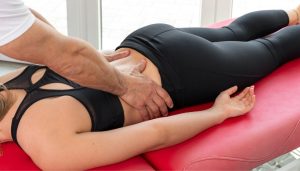
The Watson Headache Approach applies specific sustained manual pressure to the confirmed cervical segments in a sequence determined by the assessment findings. The technique does not involve high-velocity thrust or manipulation. It uses calibrated, sustained contact with the upper cervical joints to reduce the abnormal afferent activity that is generating pain and sensitising the trigeminal nucleus caudalis.
The effect is neurophysiological rather than purely mechanical. The goal is not simply to restore joint mobility, although that often occurs. The goal is to reduce the afferent barrage from dysfunctional C1, C2, or C3 segments that is driving sensitisation of the lower brainstem. As this sensitisation reduces across the treatment program, the threshold for headache production rises, attacks become less frequent and less severe, and the cervical source that has been sustaining the pattern progressively resolves.
Treatment is delivered as an intensive program of 5 to 6 sessions over approximately three weeks at MyoFitness. The concentrated schedule reflects the clinical requirement for sustained therapeutic input to reduce central sensitisation effectively. At each session, your practitioner reassesses the upper cervical segments before treating them, adjusting the sequence and technique in response to how the cervical spine is responding to treatment.

North Melbourne, 154 Peel Street

Yarraville, 231 Hyde Street

Surrey Hills, 296A Canterbury Road
MyoFitness accepts NDIS funding for physiotherapy, myotherapy, remedial massage, and psychology.