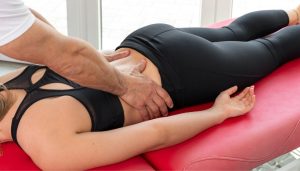
Myotherapy, physiotherapy, remedial massage. If you’re in pain and trying to book the right appointment, the choices can be confusing, and they do overlap. The honest truth is that there’s no hard line between them, and a good practitioner in any of these fields can help with a lot. But they do have different strengths, so here’s a clear guide to help you choose.
And if you’re still not sure after reading this, don’t stress. Just give us a call or book in, and we’ll point you the right way.
There’s no hard line between them. The best results often come from the right mix, and we’ll help you find it.
Myotherapy goes a step further into assessing and treating musculoskeletal pain. A myotherapist uses a wider toolkit, including hands-on soft-tissue work, joint mobilisation, dry needling, cupping and exercise advice, and assesses what’s driving your pain rather than only treating where it hurts.
It’s a strong choice for more specific or persistent problems, like a recurring sore neck, headaches linked to the neck or jaw, or a niggle that keeps coming back. Myotherapists are trained to assess, treat and give you a plan, drawing on techniques that research supports across many common complaints.
Not sure which one you need? Tell us what’s going on and our Melbourne team will point you the right way. No referral needed.
If you want a simple rule of thumb: for general muscular tension and relaxation, start with remedial massage; for specific or persistent pain that needs assessing and a wider toolkit, myotherapy; and for a defined injury, post-surgery recovery or a structured rehab program, physiotherapy. But honestly, a quick chat with us will sort it out fastest, and we’ll never push you toward something you don’t need.
The takeaway
Myotherapy, physiotherapy and remedial massage all help, with different strengths, and plenty of overlap. Remedial massage shines for muscular tension and relaxation, myotherapy for assessing and treating persistent pain with a broad toolkit, and physiotherapy for injury rehab and structured exercise. The best care is often a mix, and with all three under one roof, our Melbourne team can help you find exactly the right fit.
Remedial massage focuses on muscles and soft tissues to help ease tension, stiffness and general muscular discomfort. It can also support relaxation and recovery after training or a busy week.
Myotherapy involves assessing and treating musculoskeletal problems using techniques such as soft tissue therapy, joint mobilisation, dry needling and exercise advice.
Physiotherapy is particularly useful for specific injuries, post-surgery recovery and structured rehabilitation. Treatment may combine hands-on techniques, exercise therapy, strengthening and movement retraining.
For general muscle tension, remedial massage may be a good starting point. For persistent or recurring musculoskeletal pain, myotherapy may be appropriate, while physiotherapy is often suited to injury rehabilitation and structured return to activity.
There is significant overlap between these services, and they can complement each other. Combining hands-on treatment with appropriate exercise and rehabilitation may provide a more complete approach to recovery.
You don’t have to work it out alone. The MyoFitness team can discuss your symptoms and goals and help you choose the most appropriate practitioner or combination of services for your needs.
Our North Melbourne (154 Peel St) and Yarraville (231 Hyde St) Surrey Hills at 296A Canterbury Road clinics are easy to reach from across the area, including:
MyoFitness also operates clinics in North Melbourne at 154 Peel Street and Surrey Hills at 296A Canterbury Road. All three clinics offer Watson Headache® Approach assessment and treatment for migraine.
Three well-established clinics across North Melbourne, Yarraville, and Surrey Hills, each delivering the same standard of clinical care.
A clinical team spanning remedial massage, myotherapy, physiotherapy, lymphatic drainage, and psychology under one roof.
Recognised for clinical outcomes, patient experience, and professional standards across the allied health industry.
Every session begins with a clinical assessment. Treatment is directed at the actual cause of your pain, not just the location where you feel it.