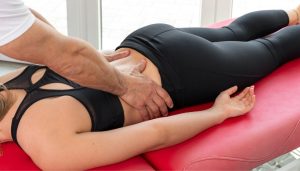
A neck headache, in clinical terms, is a headache that originates from structures in the upper cervical spine and refers pain into the head. The person experiencing it feels the pain in their head. It may be one-sided. It may throb. It may spread from the base of the skull over the crown and into the eye. What it does not feel like, for most people, is a neck problem.
This is the defining clinical challenge of neck-related headache. The source is in the neck. The pain is in the head. Because the pain appears in the head, clinical attention focuses on the head: on neurological causes, hormonal triggers, stress, sleep, and diet. The upper cervical spine that is generating the pain is never specifically assessed, never treated, and the headache pattern continues indefinitely under a label that fits the symptoms without explaining the source.
The Watson Headache Approach, available at MyoFitness across Melbourne at Yarraville, North Melbourne, and Surrey Hills, is built to close this gap. It provides systematic, segment-by-segment assessment of C1, C2, and C3, testing whether provocation of these segments reproduces the person’s familiar headache. When it does, the neck is confirmed as the source. Treatment addresses that source directly, using specific sustained manual techniques to reduce the abnormal afferent signals that the dysfunctional segments are generating into the brainstem.
The reason neck headaches are so frequently unidentified is straightforward: the pain is not where the problem is. The upper cervical spine sends pain signals through a brainstem pathway that the brain perceives as coming from the head. Without specifically testing the cervical spine, the diagnosis will always point somewhere else.
The anatomical reason the neck can produce head pain is specific and well-established in the neurophysiological literature. Understanding it explains why so many neck headaches go unidentified for so long, and why the Watson Headache assessment is the clinically appropriate test to confirm or rule out a cervical source.
The trigeminal nerve supplies all sensation to the head and face: the scalp, forehead, temples, periorbital region, face, jaw, and meninges. Its descending spinal tract extends from the brainstem downward through the spinal cord to approximately the C3 level. The pain-processing nucleus of this tract, the trigeminal nucleus caudalis, therefore occupies the same region of the lower brainstem and upper cervical cord as the dorsal horn cells that receive input from the C1, C2, and C3 nerve roots.
These pathways converge. Afferent signals arriving from the upper cervical joints, muscles, discs, and ligaments enter the same processing structure as signals from the trigeminal territory of the head and face. The brain cannot reliably distinguish between them. Pain originating at C2 is processed in a structure the brain associates with head pain, and so it is perceived as head pain. The neck generates the signal. The head is where the pain appears.
The referral patterns of C1, C2, and C3
Each of the three upper cervical segments has a characteristic pain referral territory in the head. These patterns explain the diversity of neck headache presentations and why the same anatomical mechanism can produce headaches that feel very different from person to person.
C1, the atlas, is associated with suboccipital pain and referral to the vertex and crown of the head. Dysfunction at the atlanto-occipital joint produces a deep, poorly localised ache that many people describe as pressure or fullness rather than sharp pain.
C2, the axis, is the most commonly identified contributor to neck headache at MyoFitness. The greater occipital nerve arises from the C2 dorsal root and supplies the posterior scalp from the occiput forward to the vertex. Dysfunction at C2 produces pain that refers into the occiput, up over the crown, behind the ear, at the temple, and around the eye. The characteristic pattern of pain wrapping from the back of the head to the eye is a C2 referral pattern and is frequently misclassified as migraine.
C3 and the third occipital nerve supply the suboccipital region and lateral neck. The C2-C3 zygapophyseal facet joint is among the most commonly injured cervical structures in whiplash and is a frequent contributor to the broad posterior and lateral headache patterns seen in post-whiplash presentations at MyoFitness.
Our practitioner attended the Watson Headache Institute Level 1 Foundation Headache Course titled “Cervicogenic Headache and The Role of C1-C3 Cervical Afferents in Primary Headache” presented by Dr Dean H Watson PhD, Australian Musculoskeletal Physiotherapist. For further information, go to: www.WatsonHeadacheApproach.com
The course was based on the Watson Headache Approach, a protocol for the skilled assessment and management of the upper cervical (neck) spine in Cervicogenic and Primary Headache, and related conditions in which the underlying dysfunction is sensitisation of the lower brainstem. The Watson Headache Approach is recognised as a scientifically researched method of examination as well as a comprehensive clinical management system. For further information, go to: www.WatsonHeadacheApproach.com
If you are in Melbourne’s inner west and your headaches have not responded to medication or general treatment, the upper cervical spine may not have been assessed. The Watson Headache® Approach at MyoFitness Yarraville does exactly that.
Upper cervical dysfunction does not arise randomly. It develops through identifiable mechanisms that accumulate over time. Understanding the mechanism matters because it explains both why the headache developed and what changes are needed to reduce the risk of recurrence after the Watson Headache treatment program at MyoFitness.
The most common mechanism seen at MyoFitness across all three Melbourne clinics. Prolonged laptop, desktop, video conferencing, and mobile phone use places the upper cervical spine in sustained forward head positioning for many hours each day. Over months and years, this continuous loading of C1, C2, and C3 produces joint stress, muscular overload, and progressive dysfunction at one or more upper cervical segments. The headache develops gradually and is often attributed to stress or screen fatigue rather than cervical dysfunction.
The rapid acceleration-deceleration forces in a motor vehicle accident produce shear and compressive loading through the upper cervical joints that can cause immediate dysfunction or create a vulnerability that progresses over subsequent months or years. Post-whiplash neck headache that develops after what appeared to be a minor collision is a common and clinically significant presentation at MyoFitness, often many months after the original injury when the connection to the trauma is no longer obvious to the person experiencing it.
Dentists, surgeons, sonographers, and other clinicians whose work requires sustained cervical positioning in specific directions for extended periods develop upper cervical dysfunction through occupational loading. Electricians, plumbers, and builders whose overhead and confined-space work requires repetitive cervical loading in extended and rotated positions present with similar patterns from a different occupational context.
Road cyclists in sustained aerodynamic positions, swimmers with repetitive cervical rotation, contact sport athletes, and gym-goers accumulate upper cervical loading over training seasons. Neck headache in athletes typically develops gradually across a training block and worsens with increasing volume. The cervical mechanism is often overlooked because the headaches are attributed to training fatigue or dehydration.
Natural age-related changes within the cervical spine can progressively alter the mechanics of the upper cervical joints, particularly C1–C3. Disc degeneration, facet joint arthropathy, reduced joint mobility, and osteoarthritic changes may increase mechanical stress on pain-sensitive structures capable of referring pain into the head. Many people notice headaches becoming more frequent or persistent with age, especially when combined with prolonged sitting, reduced physical activity, or previous neck injuries. The cervical contribution is frequently overlooked because the symptoms are attributed solely to ageing rather than treatable cervical dysfunction.
The cervical spine spends approximately one-third of every day in a sleeping position. Poor pillow support, unsuitable mattress firmness, stomach sleeping, or prolonged cervical rotation during sleep can place sustained mechanical stress on the upper cervical joints and surrounding soft tissues for many consecutive hours. Individuals commonly wake with neck stiffness, headaches that are worse first thing in the morning, or headaches that gradually improve with movement throughout the day.
The MyoFitness Yarraville clinic at 231 Hyde Street is accessible from across the inner west. All of the following suburbs are within easy reach of the clinic.
MyoFitness also operates clinics in North Melbourne at 154 Peel Street and Surrey Hills at 296A Canterbury Road. All three clinics offer Watson Headache® Approach assessment and treatment for migraine.
Three well-established clinics across North Melbourne, Yarraville, and Surrey Hills, each delivering the same standard of clinical care.
A clinical team spanning remedial massage, myotherapy, physiotherapy, lymphatic drainage, and psychology under one roof.
Recognised for clinical outcomes, patient experience, and professional standards across the allied health industry.
Every session begins with a clinical assessment. Treatment is directed at the actual cause of your pain, not just the location where you feel it.
While neck headache shares many features with primary headache disorders, certain characteristics are more specifically associated with a cervical source and should prompt targeted Watson Headache assessment at MyoFitness.